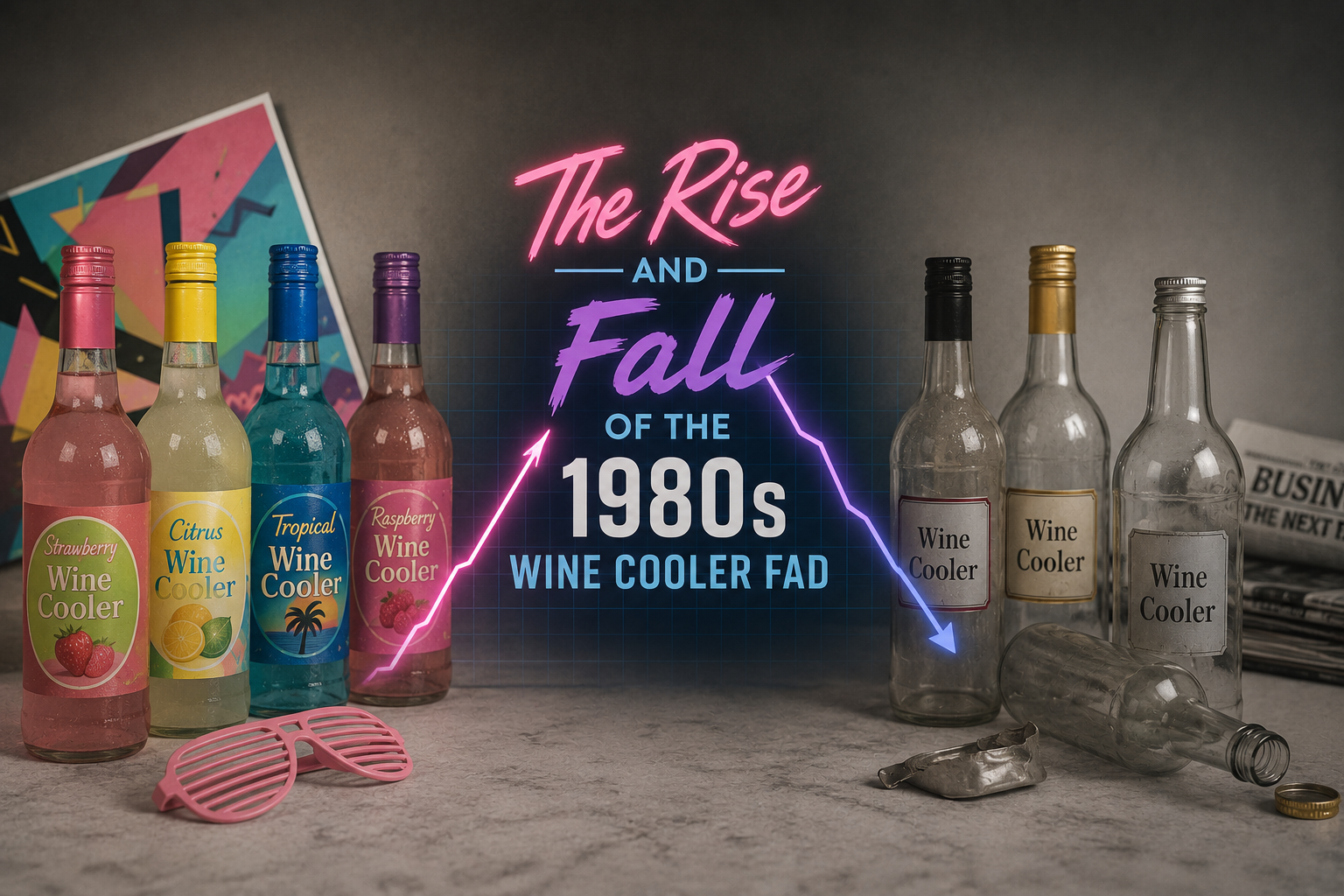
The Rise and Fall of the 1980s Wine Cooler
*How a homemade beach concoction became a multi-billion-dollar beverage empire, defined a decade's aesthetic, and vanished overnight.
If you could distill the sensory experience of the mid-1980s into a single object, it wouldn’t be a cassette tape, an arcade cabinet, or a pair of neon leg warmers. It would be a sweating, single-serve glass bottle filled with a brightly colored, intensely sweet, carbonated liquid known as a wine cooler. For a few brief, explosive years, this beverage didn't just dominate the alcohol industry—it completely transformed American marketing, social drinking habits, and pop culture.
Before the hard seltzers, canned cocktails, and ready-to-drink (RTD) mixes of the modern era, there was the wine cooler. It was a phenomenon that perfectly captured the excess, optimism, and uninhibited commercialism of the 1980s. But where did this sugary craze come from, why did it take over the world, and what ultimately caused it to fizzle out?
The Humble California Origins
Long before it became an industrial juggernaut, the wine cooler was a grassroots, homemade antidote to the scorching California summer heat. In the 1970s, beachgoers and backyard grill-masters regularly mixed cheap white wine with club soda, ginger ale, or lemon-lime soda, cutting it with fruit juice to create a refreshing, low-alcohol punch. It was light, unpretentious, and effortlessly casual.
Enter Michael Crete and Stuart Bewley. In 1981, these two childhood friends from Santa Cruz decided to commercialize this backyard staple. They mixed white wine, carbonated water, and a blend of fruit juices in a concrete mixer, bottling the concoction under the name California Cooler. Sold in distinctive short, stubby four-packs with a green-and-white label, it was an instant localized hit.
- 10 Million+* — Cases sold by California Cooler by 1984
- **$1.7 Billion* — Total value of the wine cooler industry by its peak in 1987
- By 1984, California Cooler was selling millions of cases annually, entirely creating a new beverage category from scratch. The drink bridged a massive cultural gap: it wasn't as heavy or bitter as beer, and it lacked the stuffy, intimidating etiquette associated with traditional wine. It was sweet, fizzy, and accessible to anyone of legal drinking age.
The Corporate Wine Cooler Wars
- Where there is explosive growth, corporate giants are never far behind. Seeing California Cooler's staggering success, the world's largest beverage companies jumped into the fray, triggering the infamous "Wine Cooler Wars" of the mid-1980s. Practically overnight, supermarket shelves were flooded with competitors.
- E. & J. Gallo, the powerhouse winemaking family, launched Bartles & Jaymes. Joseph E. Seagram & Sons brought out Seagram’s Coolers. Even beer giants got involved, with Anheuser-Busch introducing Dewey Stevens. The drinks evolved from basic citrus blends to an explosion of synthetic tropical flavors: wild berry, peach, tropical passion, and margarita, dyed in pastel pinks, electric blues, and neon greens.
- "Thank you for your support" - The battle wasn’t just fought on supermarket shelves; it was fought on television. Gallo revolutionized advertising with two fictional, deadpan elderly characters named Frank Bartles and Ed Jaymes. Sitting on a rustic porch, the duo delivered dry, hilarious monologues about their premium cooler, ending every ad with their iconic expression of gratitude. The ad campaign became a massive cultural touchstone, making a multi-billion-dollar corporation feel like a pair of lovable underdogs.
- Meanwhile, Seagram's swung to the opposite end of the cultural spectrum, hiring the pinnacle of 1980s cool: Bruce Willis. Fresh off his success on the hit show Moonlighting, a charismatic Willis danced down city streets, crooned blues tunes, and clinked bottles on porches, cementing the wine cooler as the ultimate social accessory for young, trendy adults.
The Anatomy of a Fad
- The wine cooler fad thrived because it perfectly aligned with several macroeconomic and cultural shifts of the decade:
- The Sweet Tooth Trend:* The 1980s saw a massive boom in sweetened, processed foods. The wine cooler masked the taste of alcohol entirely behind a wall of fructose and real or artificial fruit juices.
- Convenience Culture:* Packaged in neat, single-serve four-packs with twist-off caps, coolers required zero effort, zero mixing, and no glassware. They were tailor-made for the "ready-made" generation.
- Broad Demographic Appeal:* Crucially, wine coolers succeeded in attracting female consumers at a rate beer never had, while simultaneously appealing to young men who preferred sweeter flavor profiles over standard lagers.
No retrospective of the era's excess would be complete without mentioning Sun Country, a brand that took the market's demand for high volume and low effort to its absolute logistical limit. While competitors stuck to traditional four-packs of single-serve glass bottles, Sun Country shook up grocery store shelves by introducing their wine coolers in massive, two-liter plastic soda bottles. It was a hilarious, unapologetic peak-80s concept: a party-sized jug of neon-colored fruit alcohol designed to be poured directly into plastic cups at backyard barbecues and frat parties. Though it further stripped away any remaining illusion of wine-drinking sophistication, the sheer novelty and unmatched value of a two-liter wine cooler made Sun Country a legendary staple of the decade’s party scene.
The Hangover: A Sudden and Brutal Demise
By 1987, the wine cooler market had peaked. But the downfall of the fad was as swift as its ascent. The bubble burst due to a combination of legislative changes, shifting consumer tastes, and corporate cost-cutting.
The fatal blow landed on January 1, 1991, when the United States Congress implemented a massive hike on the federal excise tax for wine. The tax skyrocketed from 17 cents per gallon to $1.07 per gallon. Virtually overnight, utilizing real wine in mass-market coolers became economically unviable.
To survive, beverage companies quietly reformulated their products. They dropped the wine entirely and switched to a cheaper malt-based alcohol alternative, effectively turning wine coolers into flavored malt beverages (FMBs). While the name "cooler" stuck around in colloquial speech, the actual wine cooler was dead.
Concurrently, the aesthetic of the 1980s was aging poorly. As the calendar flipped into the 1990s, the bright, neon, unapologetically artificial culture of the previous decade was replaced by the raw, minimalist, and authentic ethos of the grunge era. Drinking a neon-pink, ultra-sweet beverage out of a small glass bottle suddenly felt incredibly outdated and uncool.
The Legacy: The Ancestor of the Modern Can
While the 1980s wine cooler is often looked back upon with nostalgic amusement—evoking memories of sticky kitchen floors, terrible hangovers, and questionable fashion choices—its DNA dominates today's alcohol market.
The modern ready-to-drink (RTD) alcohol boom owes everything to the wine cooler. The multi-billion-dollar hard seltzer crazes, the rise of canned ranch waters, pre-mixed gin & tonics, and flavored malt beverages like Mike's Hard Lemonade or Smirnoff Ice are simply the modern, low-calorie, sleeker iterations of the trail blazed by California Cooler and Bartles & Jaymes.
So, the next time you crack open a cold canned cocktail on a hot summer day, raise a glass to Frank, Ed, and a wild, neon-soaked decade that changed the way the world drinks forever.
Comments (0)
No comments yet. Be the first to share your thoughts.
Sign in in your browser to leave a comment.