The Big Tease: The Surprising History Behind the Term "Hair Band"
How an era of leather, lace, and cans of Aqua Net got its name—and why the bands actually hated it.**
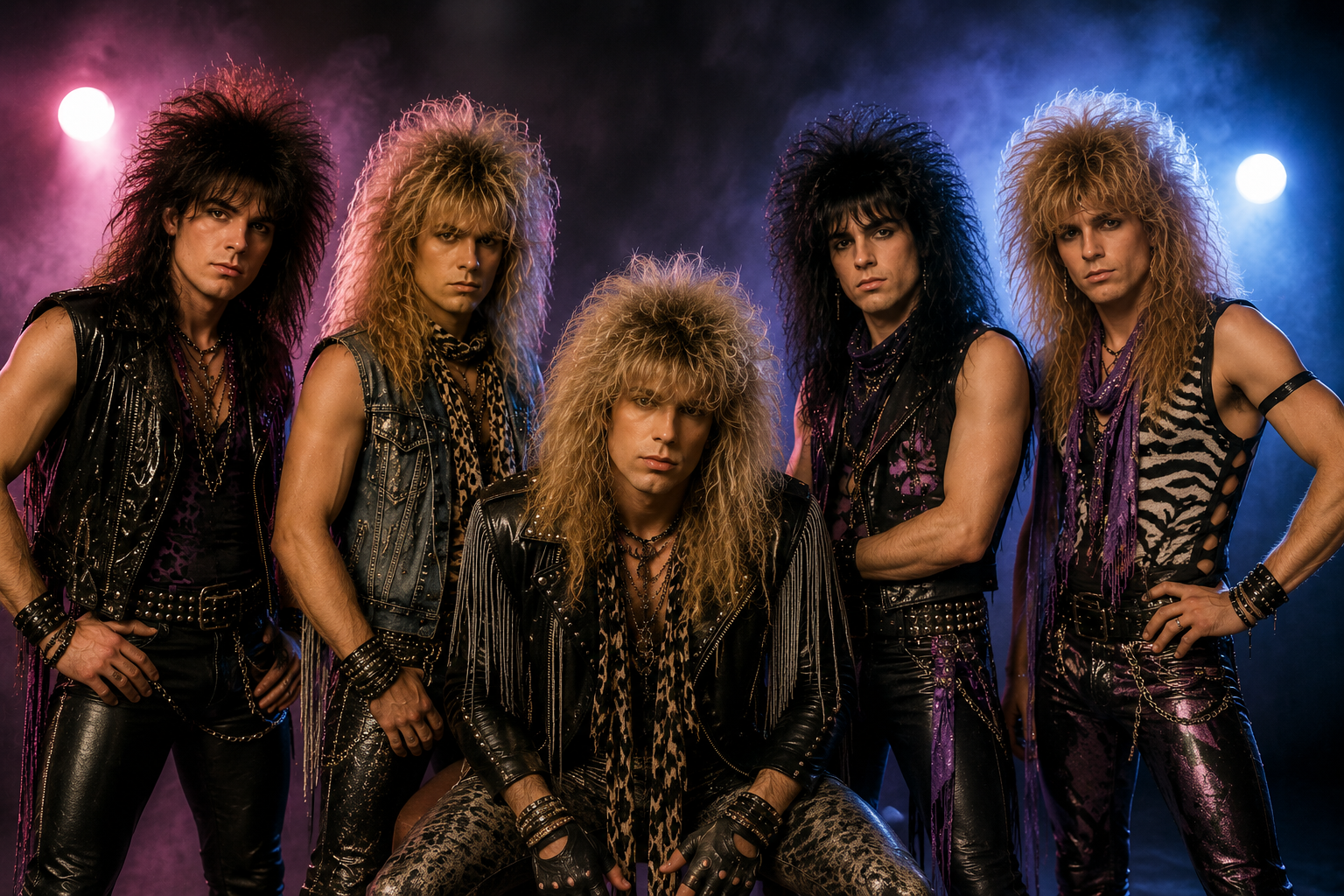
If you close your eyes and picture the 1980s rock scene, your brain instantly conjures a very specific image: towering walls of Marshall amplifiers, tight spandex, ripping guitar solos, and, above all else, gravity-defying, back-combed, heavily lacquered hair.
For nearly a decade, bands like Mötley Crüe, Poison, Ratt, and Bon Jovi ruled the airwaves and MTV. Today, we affectionately (and sometimes playfully) refer to these groups as "hair bands" or "hair metal".
But if you walked up to Bret Michaels or Nikki Sixx in 1986 and complimented them on being a great "hair band," you probably would have ended up on the receiving end of a flying leather boot.
Where did this term actually come from, and how did it become the defining label for an entire musical generation? The answer requires a trip through the history of rock and roll, a look at changing music trends, and a heavy dose of 1990s cynicism.
What Were They Called in the 1980s?
Here is the first rule of hair metal history: Nobody called it "hair metal" in the 1980s.
Throughout the decade of excess, if you bought a ticket to see Dokken, Cinderella, or Warrant, you were going to a heavy metal or hard rock show. Within the music industry and rock journalism, the preferred term was glam metal or pop metal, acknowledging the genre’s roots in 1970s British glam rock (think T. Rex, David Bowie, and Sweet) mixed with radio-friendly pop hooks.
To the fans, it was just the standard visual language of rock and roll grandeur. Ever since Jimi Hendrix, Robert Plant, and Alice Cooper, rock gods were supposed to have majestic, flamboyant hair and wild clothes. The bands on the Sunset Strip simply took that existing blueprint, bought a few cases of Aqua Net extra-super-hold hairspray, and dialed the volume up to eleven.
The Birth of a Backlash: The Early 1990s
The term "hair band" didn't emerge as a celebration; it was weaponized as a derogatory insult.
By the turn of the 1990s, the rock scene had become profoundly oversaturated. Record labels were signing any group of guys who could tease their hair and sing a power ballad. To critics and traditional metalheads (who preferred the raw, no-nonsense aesthetic of thrash metal bands like Metallica and Megadeth), the mainstream rock scene had become completely superficial.
The exact origin of the phrase is difficult to pin down to a single person, but music historians agree that the term "hair band" and "hair metal" gained widespread traction between 1991 and 1992 in the pages of alternative music publications like Spin and The Village Voice.
It was coined by rock critics to dismiss these groups as corporate products that cared far more about their wardrobe, makeup, and follicles than their musicianship. The label essentially argued: Take away the hair, and there's no substance left.
The Flannel Revolution
The nail in the coffin for the genre—and the catalyst that permanently cemented the "hair band" label—was the explosion of the Seattle grunge scene.
When Nirvana’s "Smells Like Teen Spirit" hit MTV in late 1991, the cultural landscape shifted overnight. Grunge championed anti-commercialism, raw emotion, and a total lack of pretense. Musicians performed in the same flannel shirts, ripped jeans, and unwashed, un-styled hair they wore to the grocery store.
In this new, ultra-serious musical climate, the colorful, theatrical bands of the 1980s were suddenly viewed as embarrassing relics of a bygone era. "Hair band" became the ultimate dismissive shorthand used by the alternative generation to describe anything that felt dated, superficial, or overly commercialized.
From Insult to Badge of Honor
Something funny happens to musical insults if you wait long enough: they turn into nostalgia.
Decades after the grunge revolution, the sting of the "hair band" label has completely faded. Today, the term is no longer used exclusively by cynical critics to tear down a band's credibility. Instead, it has been proudly reclaimed by fans and musicians alike as a badge of honor and a celebration of an incredibly fun, uninhibited era of rock history.
And let's be honest—while the critics claimed it was "all style and no substance," history has proven otherwise. Beneath those towering manes of hair were some of the most technically gifted guitar virtuosos (like Eddie Van Halen, Warren DeMartini, and George Lynch) and finest pop-rock songwriters of a generation.
They might have used enough hairspray to punch a permanent hole in the ozone layer, but those "hair bands" sure knew how to throw a party.
Return to the days of the hairband with our 80s Metal Hair Nation Music Video Station: Hair Nation - 80s Metal Music Video Station | vidstations.tv
Comments (0)
No comments yet. Be the first to share your thoughts.
Sign in in your browser to leave a comment.