Life in the 1980s
What was life like in the 1980s?
TV in the 80s
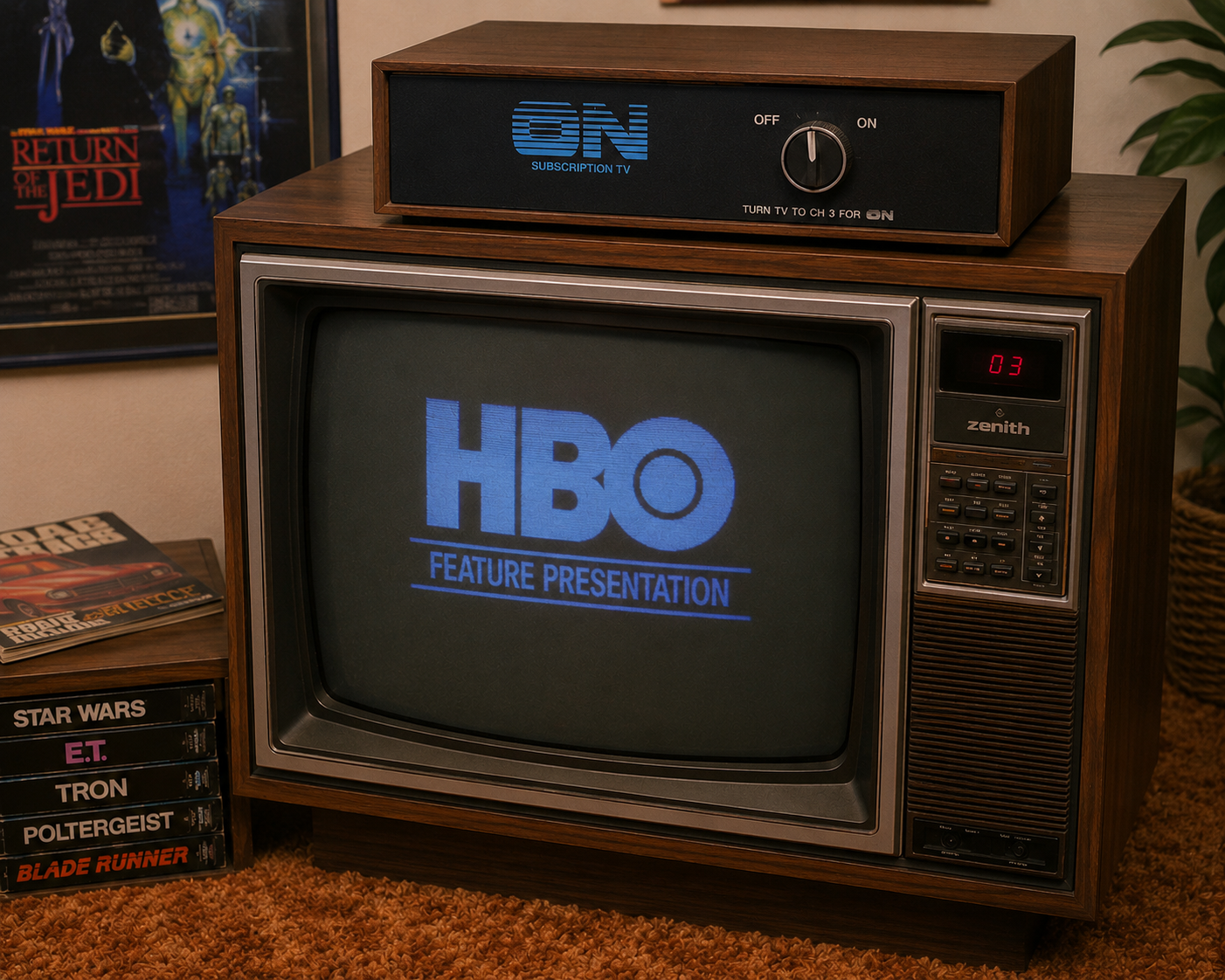
Watching television in the 1980s was a tactile, shared family experience anchored by massive, deep-backed Cathode Ray Tube (CRT) sets, often encased in faux-wood paneling. At the dawn of the decade, changing the channel meant physically walking to the TV to clunk a mechanical dial from 2 to 13, or adjusting "rabbit ear" antennas wrapped in aluminum foil to clear up static on the snowy UHF bands. However, the 1980s quickly became the era of the great cable explosion. This tech shift was symbolized by wood-grain cable boxes perched on top of the TV, featuring rows of mechanical push-buttons or a slide-rule selector that you had to manually slide across a track to change channels. Premium movie channels like HBO, Showtime, or The Movie Channel required an extra, clunky "descrambler" box or a key that physically unlocked the scrambled picture. This massive shift completely transformed the media landscape: at the start of the 1980s, the average American home had access to just under 10 channels, dominated entirely by the "Big Three" networks (ABC, CBS, and NBC) and PBS. By the end of the decade, that exploded to an average of over 30 channels, giving rise to brand-new, 24-hour cable staples like MTV, ESPN, CNN, and a fourth major broadcast competitor, Fox.
Clothes worn in the 80s
Fashion in the 1980s was defined by a dramatic shift from muted, post-70s minimalism into an era of unapologetic excess, bold geometric shapes, and vibrant color. The decade began quietly with a continuation of late-1970s trends, featuring soft earth tones, preppy polo shirts, and straight-leg denim. However, as the fitness craze exploded mid-decade alongside the rise of MTV, everyday attire morphed into an eclectic mix of athletic wear and rebellious street style—characterized by neon leg warmers, spandex, acid-washed denim, and oversized tops inspired by pop icons like Madonna. By the late 1980s, the silhouette completely transformed into one of "power dressing." Corporate America and high fashion alike were dominated by structured, exaggerated shapes featuring massive shoulder pads, double-breasted power suits, and tightly cinched belts designed to project authority and status. Whether through casual neon streetwear or sharp, geometric formalwear, the overarching trajectory of 80s fashion was a steady climb toward making the loudest visual statement possible.
Technology of the 80s
The 1980s served as the foundational bridge between the analog past and our digitized future, taking computing out of secretive corporate labs and planting it firmly into everyday life. At the start of the decade, "high-tech" consumer electronics meant portable cassette players like the revolutionary Sony Walkman—which for the first time made music entirely personal and mobile—and heavy, top-loading VCRs that required chunky VHS tapes to record television broadcasts. Microcomputers were still a niche, enthusiast hobby, largely limited to text-heavy command lines on glowing green-phosphor screens. However, the trajectory of the decade was a relentless push toward accessibility, speed, and miniaturization. By mid-decade, iconic machines like the IBM PC, the Commodore 64, and the Apple Macintosh introduced everyday families to user-friendly graphic interfaces, computer mice, and 3.5-inch floppy disks. Entertainment shifted inside the home too, evolving from the blocky, primitive pixels of early Atari systems to the smooth, side-scrolling dominance of the 8-bit Nintendo Entertainment System (NES). By the close of the 1980s, technology had fundamentally rewired society: the pristine laser-read audio of Compact Discs (CDs) was rapidly replacing vinyl, blocky "brick" cell phones were making their first appearances in executives' cars, and the very first seeds of the World Wide Web were being quietly sewn through online services like CompuServe and Prodigy —permanently altering how humanity worked, played, and communicated.
Toys from the 80s
The 1980s was a golden era of consumer play, driven by a booming toy industry that mastered the art of the viral fad and the multi-media franchise. At the turn of the decade, the playground was dominated by analog, tactile puzzles and collective obsessions, epitomized by the maddeningly addictive Rubik's Cube and the frantic, real-world stampedes over yarn-haired Cabbage Patch Kids in 1983. As the years progressed, toys became deeply intertwined with Saturday morning cartoons, giving rise to massive action figure lines like He-Man and the Masters of the Universe, Transformers, and G.I. Joe, which allowed kids to recreate television plotlines in their living rooms. Concurrently, hyper-focused novelty fads swept through schools at dizzying speeds—whether it was slapping neon Slap Bracelets onto wrists, collecting smelly scratch-and-sniff stickers, or trading Garbage Pail Kids cards. By the close of the decade, the nature of play had fundamentally shifted toward the digital screen. The late 1980s saw traditional toys share massive retail shelf space with the all-conquering Nintendo Entertainment System (NES) and Game Boy, transforming kids from imaginative roleplayers into tech-savvy gamers and setting a brand-new baseline for childhood entertainment heading into the next decade.
Cars in the 1980s
Automotive design in the 1980s underwent a radical transformation, moving away from the heavy chrome and rounded edges of previous eras toward a highly distinct, futuristic aesthetic. The decade began with the absolute dominance of "boxy" design, characterized by sharp, geometric lines, rectangular quad-headlights, and upright grilles meant to look rugged and utilitarian. As families grew, the automotive landscape shifted forever mid-decade with Chrysler's 1984 introduction of the minivan—like the wood-paneled Dodge Caravan and Plymouth Voyager—which quickly replaced the traditional station wagon as the quintessential suburban family hauler. However, by the late 1980s, the starkly angular "folded paper" look gave way to a massive push for fuel efficiency and aerodynamics, heavily influenced by European styling. This "aero look" favored smooth, sweeping wedges, flush glass, and curved bumpers—best exemplified by the game-changing 1986 Ford Taurus. Inside the cabin, cars transformed into digital command centers, swapping out analog gauges for glowing vacuum-fluorescent digital dashboards, talking voice-warning systems, and premium cassette decks with graphic equalizers, perfectly mirroring the high-tech obsession of the era.
Food in the 80s
Inside the 1980s grocery store, the newly affordable kitchen microwave was the ultimate disruptor. Food scientists raced to engineer products that could go from frozen solid to piping hot in minutes. This era birthed iconic handheld convenience foods like Hot Pockets (1983) and the ill-fated but memorable Micro Magic line, which attempted to deliver microwavable milkshakes, burgers, and french fries.
For children, the landscape became hyper-processed and profoundly interactive. Lunchboxes were revolutionized by the 1988 debut of Lunchables, which turned a midday meal into a DIY assembly line of crackers, processed meat, and cheese. It was paired with heavily marketed, sugar-laden novelty drinks like Squeezits, Capri-Sun, and the neon-green, Ghostbusters-themed Hi-C Ecto Cooler.
Meanwhile, a massive mid-decade fitness craze—and a generalized public panic over dietary fat and cholesterol—led families to swap out butter for tubs of margarine. It also created a massive retail market for low-calorie alternatives, triggering the explosion of frozen yogurt brands like TCBY in malls and grocery freezer sections across the country.
Ultimately, life in the 1980s was defined by a vivid, hyper-accelerated transition from the analog traditions of the past into a bold, digitized future. It was a unique, transitional decade where clunky manual dials, neon street style, and tactile playground fads harmoniously collided with the dawn of home computers, cable television, and personal tech, leaving behind an indelible cultural footprint that reshaped modern life.
Comments (0)
No comments yet. Be the first to share your thoughts.
Sign in in your browser to leave a comment.